Category: CEE_Majors

Program Objective:
This program cultivates application-oriented, high-quality professionals with firm ideals and beliefs, strong professional ethics, innovative awareness, and a spirit of craftsmanship. Students will gain sustainable development capabilities, solid theoretical knowledge of information security, and practical technical skills. Graduates are prepared for careers in information security within IT-related fields such as computer science, electronic information, finance, business, government, and defense.

Main Courses:
Fundamentals of Computer Networks, Operating System Security Management (Windows, Linux), Web Design and Development, Python Programming, Network Protocol Security Analysis, Network Penetration Testing, Network Security Classification Protection, and Network Equipment Security Management.

Program Objective:
This program prepares high-quality, skilled professionals with knowledge and technical expertise in mobile internet application software development, website development and maintenance, database management and application, as well as the operation and maintenance of mobile internet systems. Graduates are equipped to work in the fields of mobile internet product development, maintenance, and sales.

Main Courses:
Fundamentals and Practice of Networking Technology, Java Programming, C Programming, Python Programming, Web Front-End Development, Linux Operating System Applications, Database Technology Applications, Fundamentals of Android Application Development, Software Testing Techniques, and Network Interconnection Technology and Protocols.

This program adheres to the principle of cultivating virtue and nurturing talent, integrating moral education with technical training, and fostering students’ all-round development in morality, intelligence, physical fitness, aesthetics, and labor skills. It is primarily aimed at cybersecurity companies, Internet enterprises, and organizations in various sectors that require network connectivity.

The program cultivates knowledgeable and versatile high-quality technical talents with a solid cultural foundation, good professional ethics, and strong humanistic literacy. Graduates are equipped to work in areas such as Internet security management and information protection, network system security operation and maintenance, information system security planning and implementation, and information system security assessment.

Career pathways include positions in cybersecurity companies, Internet enterprises, and information security departments of organizations in various industries, focusing on Internet security management, information protection, network system security operations, security project implementation, and security evaluation.

This program at Shanghai Science and Technology Management School is part of the Secondary-to-Higher Vocational Education Integration with the Information Security Technology Application major at Shanghai College of Science and Technology.

The Software and Information Services program at Shanghai Information Technology School was founded in 2001. After 22 years of development, it has become a flagship specialty known for its distinctive characteristics, strong faculty, and close industry collaboration. In 2020, building upon this foundation, the school launched the Mobile Application Technology and Services program, which focuses on training talents in mobile app development and shares teaching resources with the software program.

Over the years, the program has achieved remarkable results by leveraging resources such as the Shanghai Information Technology (Computer) Open Training Center (5-star rated), the Municipal Core Teacher Training Base (Computer category), the High-skilled Talent Training Base, the National Training Base for the WorldSkills Competition, and multiple industry associations. The program boasts a full range of training equipment, rich teaching resources, and well-established school-enterprise cooperation platforms.

Career paths include roles such as Mobile Application Developer, Mobile UI Designer, Web Developer, and Software Testing Engineer.

This program at Shanghai Information Technology School is part of the Secondary-to-Higher Vocational Education Integration initiative with the Mobile Internet Application Technology program at Shanghai College of Science and Technology.

Established in 2001, this program has grown over the past 20 years into a well-developed, industry-aligned, and faculty-strong specialty. It is one of the school’s key development programs and is recognized as a branded specialty in Shanghai. Over the years, the program has leveraged the resources of the Shanghai Information Technology (Computer) Open Training Center, the Municipal Core Teacher Training Base (Computer category), the High-skilled Talent Training Base, the National Training Base for the WorldSkills Competition, and various industry associations to achieve significant success.

In 2016, the program expanded to include a focus on Computer Network Technology (Web Development). After more than two years of development, the program now boasts comprehensive software and hardware resources, deep integration of school-enterprise cooperation, and a proven track record of producing national-level competitors for the WorldSkills Competition. Its teaching achievements have been recognized by enterprises, associations, and relevant government departments.

Career paths for graduates include roles such as Information Security Officer, Information Security Administrator, Information Security Engineer, Network Security Engineer, and Penetration Testing Engineer. Graduates may also pursue careers as Network Operation and Maintenance Engineers or Software Engineers.

This program at Shanghai Information Technology School is part of the Secondary-to-Higher Vocational Education Integration initiative with the Information Security Technology Application program at Shanghai College of Science and Technology.

Program Highlights:

The Artificial Intelligence Technology Application program aims to cultivate high-quality technical talents with a solid grasp of big data and AI thinking, capable of applying big data and AI technologies to support emerging industries integrating “Cloud, IoT, Big Data, and Intelligence” (i.e., cloud computing, Internet of Things, big data, and intelligent technologies). Through deep collaboration with industry partners, the program nurtures skilled professionals needed for socio-economic development.

Core Courses:
  • C Programming Language
  • Python Programming Language
  • Fundamentals of Computer Network Technology
  • Database Technology
  • Web Frontend Technology
  • Distributed Computing and Storage Technology
  • Network Information Security Technology
  • AI Dataset Processing
  • Machine Learning
  • Deep Learning
  • Image Data Annotation
  • AI Development Framework Application
  • Comprehensive Practical Training in AI Applications
  • OCR Recognition Practical Project
  • AI Testing Practical Project
  • AI Distributed Deployment Training Project
Key Practicals:

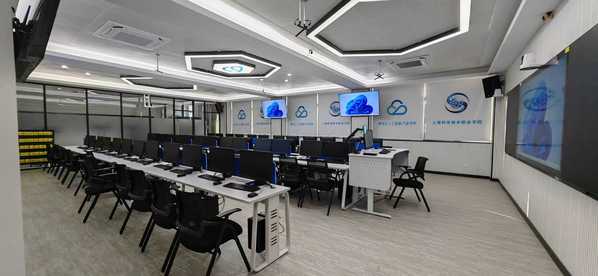
The college has partnered with Tencent Cloud Computing (Beijing) Co., Ltd. to establish three new AI teaching laboratories. Students can engage in training projects such as AI dataset processing, AI application framework, computer vision, natural language processing training, and comprehensive AI application. In-depth collaboration with leading enterprises ensures that students complete internships at companies during their third academic year to gain hands-on experience.

Career Pathways:

Graduates can pursue roles such as:

  • AI Data Annotation Specialist
  • Data Model Training Specialist
  • AI Software Testing Engineer
  • AI Technical Support Engineer
  • Intelligent Product Implementation Engineer
  • AI Application Business Promotion/Sales Representative
  • Assistant AI Product Development Engineer
  • Assistant Database Development and Maintenance Engineer
  • AI Application Development Engineer
  • Machine Learning Algorithm Development Engineer
Program Highlights:

This program is designed for applications in the field of intelligent security. It aims to cultivate high-quality technical talents with a solid foundation in electronic information technology, along with practical skills in intelligent security, intelligent electronic product development, electronic testing, and electrical control. Graduates will be able to work in manufacturing intelligent security products, integrating intelligent security systems, and managing the operation of intelligent security systems.

Core Courses:
  • Analog Electronics
  • Digital Logic Devices and Systems
  • C Programming Language
  • Microcontroller Technology
  • Embedded Systems Applications
  • Fundamentals of Computer Networks
  • Circuit CAD
  • Electronic Sensing Technology
  • Electrical Control and PLC Technology
  • Intelligent Surveillance Technology
  • Security System Engineering
Key Practicals:

The program provides well-equipped on-campus training facilities, including several jointly built training labs such as the Intelligent Surveillance Technology Lab and the Security Engineering Technology Lab, offering excellent practical conditions. It also serves as a security management training base for Shanghai universities.
Additionally, the campus is equipped with a video surveillance system (used as a practical security application platform), a campus vehicle access system, and biometric security systems, enabling students to gain hands-on experience with real-world security applications.

During their studies, students will complete integrated security vocational skill training, vocational qualification training, project-based training, enterprise internships, and a comprehensive graduation project. Students can also participate in professional clubs, activities, specialized training, skills competitions, and community service to enhance their expertise.

Career Pathways:

Graduates can work in electronic product manufacturing enterprises, security and protection system integration and design companies, as well as in electronic equipment operation, maintenance, sales, and evaluation roles.
Employment opportunities include companies such as Baosteel, Volkswagen, Shanghai Turbine Factory, Shanghai Institute of Optics and Fine Mechanics (Chinese Academy of Sciences), Shanghai Aerospace Measurement and Control Technology Research Institute, CETC No. 32 Research Institute, Shanghai Aerospace Technology Research Institute No. 804, Shanghai Posts and Telecommunications Design Consulting Institute Co., Ltd., Shanghai Tongcheng Security & Fire Engineering Co., Ltd., Shanghai Apwoton Electronic Industry Co., Ltd., and Shanghai Jingke Electronics Co., Ltd.

Potential job positions include:

  • Assistant Designer for Security System Integration
  • Security System Installation and Commissioning Technician
  • Security System Maintenance and Repair Technician
  • Assistant Engineer in Electronic Product Software and Hardware Development
  • Electronic Product Software and Hardware Maintenance Technician
  • Assistant Security System Designer
  • Assistant Security Project Supervisor
  • Assistant Electronic Product Software and Hardware Engineer
  • Sales Engineer for Electronic (including security) Products
  • Assistant Manufacturing Process Engineer
Program Highlights:

This program aims to provide students with a solid foundation in fundamental knowledge and professional skills in mobile communication, fiber optic communication, and communication networks. Graduates will be capable of manufacturing, installing, debugging, inspecting, operating, and maintaining modern communication products and equipment. They will also acquire competencies in the operation, testing, and maintenance of communication networks and devices, as well as in marketing and managing communication product projects.

Core Courses:
  • Analog Electronics
  • Digital Electronics
  • Principles of Microcontrollers
  • Embedded Systems Technology
  • Information Security Technology
  • Communication Principles
  • Fiber Optic Communication
  • Mobile Communication
  • Communication Network Technology
Key Practicals:

Basic technical training includes hands-on practice in analog electronics, digital electronics, digital communication systems, mobile communication systems, fiber optic communication systems, and communication network systems.
In the third year, students will undertake project-based training or participate in on-site internships at enterprises, followed by a comprehensive graduation project.

Career Pathways:

Graduates can work in communication companies, communication equipment manufacturing enterprises, mobile communication service departments, or electronic product manufacturing companies, in roles such as network communication engineering supervision, equipment debugging, maintenance, and assistant engineering positions.
Each year, many graduates secure employment at companies such as China Telecom Shanghai, Shanghai Aerospace Bureau, and CRSC Communication & Information Group Co., Ltd.
Students in this program are eligible to obtain the “1+X Sensor Network Application Development” vocational skill certification.

Program Highlights:

This program is designed to meet the needs of frontline roles in the mobile internet industry. It cultivates highly skilled technical professionals with solid knowledge in mobile internet application development, website development and maintenance, and database management and applications, as well as practical skills in mobile internet system operation and maintenance. Graduates will be capable of engaging in mobile internet product development, maintenance, sales, and other related work in relevant enterprises.

Core Courses:
  • C Programming
  • Embedded Systems Applications
  • Java Programming Language
  • Database Technology
  • Web Frontend Technology
  • Internet of Things Application Technology
  • Mobile App Development and Application
  • Fundamentals of Computer Network Technology
  • Python Programming
  • Network Interconnection Technology and Protocols
  • WeChat Mini Program Design
  • Android App Development Fundamentals
  • Digital Electronics Technology
  • Comprehensive Practical Training in Mobile Application Development
Key Practicals:

The program is supported by dedicated multifunctional multimedia cloud classrooms, fully equipped with 4G base stations, high-performance backend servers, Android smartphones, and tablet devices to facilitate hands-on practice. Students can complete comprehensive mobile application development projects, integrated vocational skills training (e.g., web design), and professional certification training (including website design and webpage production).

In addition, specialized student clubs have been established to provide targeted training in response to emerging 5G and IoT technologies, as well as to meet the needs of enterprises and community services. During the third year, students will engage in project-based training or on-site internships at partner enterprises, culminating in a comprehensive graduation project.

Career Pathways:

Graduates can pursue positions such as:

  • Mobile Internet Application Software Developer
  • Mobile Internet System Operations and Maintenance Administrator
  • Technical Support Specialist
  • Mobile Internet Application Business Promotion/Sales Representative
  • Assistant Web Development Engineer
  • Assistant Database Development and Maintenance Engineer
  • Mobile Company Sales Representative
  • Smart Home System Design and Installation Technician
  • Community Property Information System Administrator

Program Highlights:

The Internet of Things (IoT) represents the next wave of the information industry, following the development of computers, the Internet, and mobile communication networks. Key areas in the IoT industry include smart transportation, smart logistics, smart security, smart manufacturing, smart aquaculture, smart agriculture, smart homes, environmental monitoring, and disaster early warning—all of which have a high demand for skilled professionals.

This program focuses on IoT technology application, mobile platform application development, and IoT project implementation, with an emphasis on cultivating practical skills in IoT system planning and design, information transmission, and processing. It aims to develop highly skilled technical talents to meet the needs of socio-economic development.

Core Courses:

C Programming, Python Programming, Fundamentals of Computer Network Technology, Database Technology, Digital Logic and Digital Circuits, Web Application Development, Java Programming, RFID Principles and Applications, Wireless Sensor Networks, Microcontroller Principles and Applications, Linux Principles and Applications, Embedded Systems, Android Mobile Application Development, IoT Networking Technology, among others.

Key Practicals:

The school has established collaborative labs with Huawei Technologies Co., Ltd., Shanghai Qixiang Information Technology Co., Ltd., Tencent, and other enterprises, including an Artificial Intelligence Laboratory, IoT Application Technology Laboratory, and Mobile Application Development Laboratory. Students participate in practical projects such as AI dataset processing, IoT application development, and mobile app development.
Specific hands-on training includes sensor node installation, RFID technology application, mobile app development, and IoT application project design. The program maintains close partnerships with industry-leading companies, arranging internships and graduation projects at these enterprises in the third year of study.

Career Pathways:

Graduates can work in IoT applications, Internet, embedded systems, and computer-related technology fields in roles involving application development, management, and services. Employment opportunities span IoT companies, IT companies, mobile communications, embedded systems, and technology-related positions in companies, schools, and government agencies.
Graduates may also engage in IoT solution design, system integration, pre-sales technical support, post-sales technical services, and IoT technology implementation at various IoT and IT enterprises.