Category: CEE_News

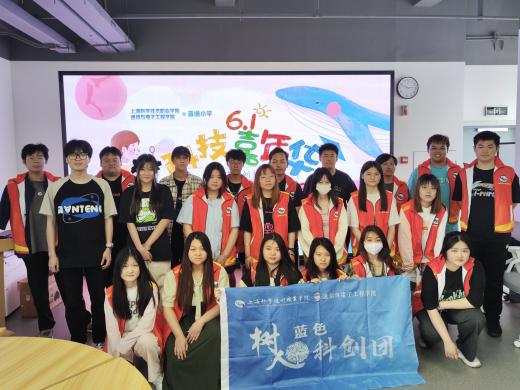
On May 31, the School of Communications and Electronic Engineering co-hosted a “June 1st Science Carnival” and a themed Science and Innovation Day with Jiading District General Primary School. The event also served as an exchange platform to promote integrated educational efforts across primary, secondary, and higher education. A total of 19 university students from the “Shuren Blue Tech Team” served as activity mentors for 57 students from grades 3 to 5, engaging them in a series of hands-on science and technology experiences.

The event began with an interactive science and technology exhibition. Vice Secretary Xu Yunfeng welcomed the visiting teachers and students and gave a detailed introduction to the day’s activities. Vice Dean Yang Chunlei inspired curiosity and excitement by engaging students in discussions about cutting-edge technologies like drones and AI. Participants experienced drone flight simulations, hands-on drone flying, and the RoboMaster AI battle experience, giving them a powerful first-hand taste of modern tech.

During the innovation practice segment, under the guidance of their mentors, the students explored AI-generated graphic design. Using pixel-based 3D modeling software, they deconstructed images into pixel blocks and recreated them using building bricks and base plates. This hands-on activity fostered their creativity, problem-solving, and innovation skills.

Throughout the sessions, students translated abstract ideas into physical creations. They brought to life the saying, “True understanding comes from doing,” as they applied what they learned in a tangible and creative way—building a solid foundation for future growth in innovation and technology.

During the school exchange, project leaders from both schools shared insights and reached a mutual understanding on furthering integrated educational development. Since 2015, the two schools have collaborated on initiatives such as the “Love and Protection” volunteer service program. This latest partnership marks a step forward in integrating classroom learning with broader social experiences, taking co-education efforts from campus into everyday life.

At the event’s conclusion, students were awarded certificates recognizing their achievements, such as “Little Craftsman of the Times,” “Creative Designer,” and “Hands-on Star.” Each student also received a Children’s Day gift. Mentors shared heartfelt messages encouraging students to keep their curiosity alive, continue exploring, and pursue their dreams in science and innovation.

The event was a successful example of inter-school collaboration, fostering creativity in young students while helping university students develop leadership and communication skills. With continued cooperation, the two schools aim to create a supportive environment for holistic talent development and contribute to nurturing a new generation of capable and well-rounded individuals.
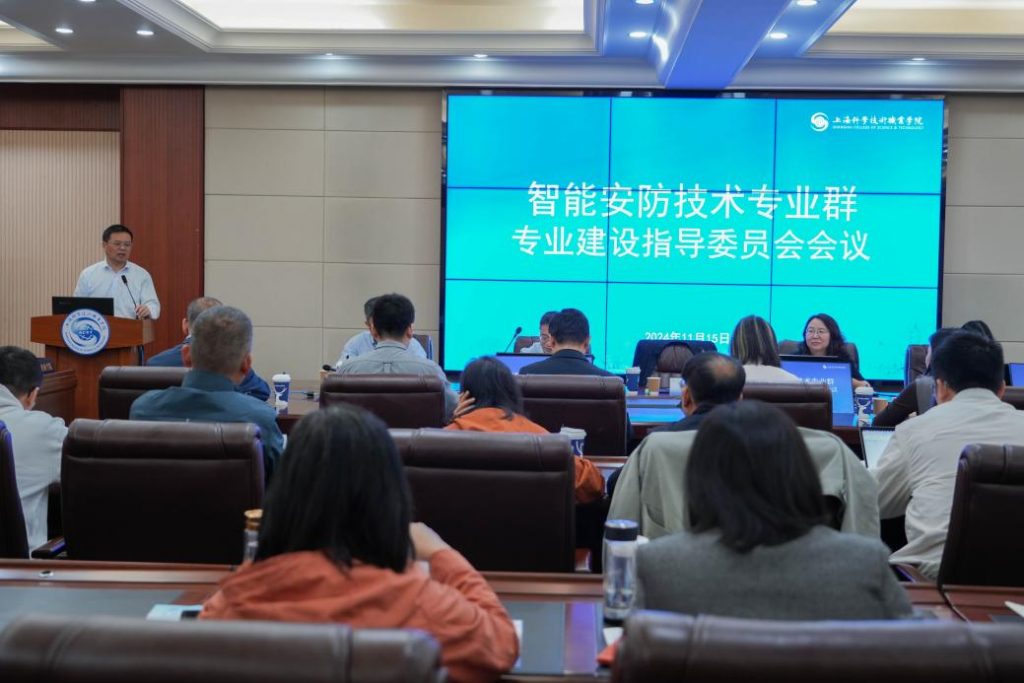
On November 15, 2024, the School of Communications and Electronic Engineering held its annual advisory committee meeting for the “Smart Security Technology Program Cluster.” School leadership, including Vice President Han Fang and Associate Dean Yang Yiming, along with faculty representatives and committee members, attended the meeting. Professor Cai Hong, Party Secretary of Shanghai Agricultural and Forestry Vocational and Technical College and Director of the Advisory Committee, chaired the session.

Vice President Han expressed appreciation for the committee’s guidance and emphasized the importance of industry-education integration in advancing the program. The school aims to strengthen partnerships with global companies like Schneider Electric and Phoenix Contact and collaborate with the China Academy of Information and Communications Technology on a new digital manufacturing center.

During the meeting, new committee members and industry professors were appointed, and Vice Dean Xu Pai presented the latest progress report on the program cluster. Attendees engaged in discussions on curriculum development and training center construction, offering valuable suggestions.

Professor Cai concluded with a summary, encouraging deeper collaboration with industries and industrial parks to enhance talent development. The meeting concluded with a tour of the Smart Security Demonstration Lab.

The session clarified future goals and reaffirmed the school’s commitment to producing high-quality talent through deeper integration of education and industry.

Recently, the School of Communications and Electronic Engineering achieved remarkable success across various areas of work in 2024, earning multiple prestigious awards. These honors fully demonstrate the school’s comprehensive strength in teaching, research, faculty development, and student training.

In performance evaluations, seven faculty and staff members received the “Excellent” rating for the 2024 annual performance review—an affirmation of their hard work and outstanding contributions over the past year. The school itself was also recognized as an “Excellent Secondary Unit” in the university’s comprehensive evaluation, highlighting its efficiency and excellence in management.

In the field of ideological and political education, the School of Communications made impressive progress. One faculty member was honored with the “Outstanding Ideological and Political Educator” title, reflecting the school’s in-depth efforts and achievements in political education. The school remains committed to fostering well-rounded socialist builders and successors through comprehensive development in morality, intellect, physique, aesthetics, and labor.

In skilled talent development, two faculty members were awarded the title of “University-Level Master of Skills,” showcasing their profound expertise and influence within their professional fields. Their efforts have played a crucial role in cultivating a large number of high-quality, skilled professionals.

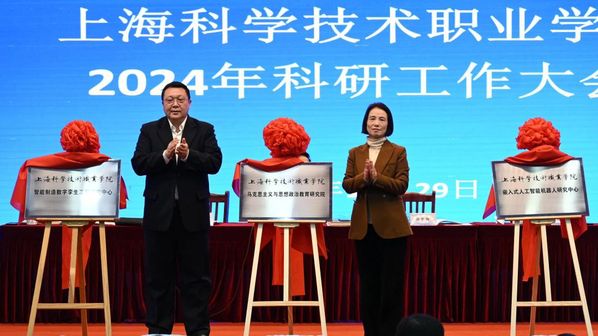
Research remains a cornerstone of the school’s development. The School of Communications was recognized as an “Advanced Research Group (2021–2024)” at the university level, demonstrating its strong capabilities in scientific innovation. In addition, the Embedded Artificial Intelligence Research Innovation Team was named a “University-Level Research Innovation Team,” and the Embedded AI Robotics Research Center was selected as a “University-Level Research Platform.” These achievements will further propel the school’s research to new heights.

The school also saw significant accomplishments in teaching. It received a second prize in the University-Level Teaching Achievement Awards, and the Security Technology Program was honored as an “Advanced Teaching Unit,” reflecting high recognition of the school’s educational efforts. Moreover, the Embedded Systems Technology course was named a “Municipal-Level Premium Online Open Course,” adding another highlight to the school’s teaching resources.

In the university’s Young Faculty Teaching Skills Competition, five individuals from the School of Communications received awards, showcasing the talent and capability of the school’s young educators. Additionally, the school won a third prize in the University-Level Faculty Teaching Ability Competition, and two individuals were honored as “Advanced Individuals in Teaching Style Development,” further motivating the faculty to continuously enhance teaching quality and excellence.

In curriculum-based ideological and political education, the school achieved excellent results as well. The course Linux Operating System Applications was named a University-Level Model Course in Curriculum Ideology and Politics, setting an example for such efforts. The school also received a first prize and a third prize in the University-Level Outstanding Curriculum Ideology and Politics Cases, marking significant progress in this area.

The numerous honors earned by the School of Communications in 2024 are a comprehensive recognition and encouragement of its accomplishments over the past year. The school will continue to uphold the spirit of its motto—”Virtue, Knowledge, Pragmatism, Innovation”—and strive forward in teaching, research, faculty development, and student cultivation, making even greater contributions to talent development and socio-economic progress.

The School of Communication and Electronic Engineering at Shanghai College of Science and Technology has made significant strides in advancing its research capabilities with the establishment of the Embedded Artificial Intelligence Innovation Team. Focusing on embedded AI robotics, the team has become a signature initiative of the school’s scientific innovation efforts.

Supported by the Embedded AI Robotics Research Center, the team is composed of experts in embedded systems, AI algorithms, hardware engineering, and software architecture, forming a robust interdisciplinary force. With strong backing from platforms like the Smart Security Technology Training Center and the Tencent Cloud AI Industry Academy, the team benefits from state-of-the-art facilities and a collaborative research environment.

By partnering with companies such as Shanghai Comagic Microelectronics Co., Ltd., the team leverages shared resources to deepen and broaden its research platform. It has successfully undertaken both vertical and horizontal research projects, including technical collaborations with firms like Jiaxing HELLA Lighting and Shanghai ZF Transmission, translating research into practical, enterprise-level solutions.

Academically, the team has published several high-quality papers in renowned journals, including studies on naval cybersecurity and intelligent IoT gateways. Multiple patents and software copyrights have also been secured and commercialized, generating notable economic value.

In talent development, the team plays a vital role. Under the guidance of experienced faculty like Yang Chunlei, students have excelled in national competitions such as the Vocational Skills Competition and the “Internet Plus” Innovation and Entrepreneurship Contest, earning awards for innovative designs like smart electronics and intelligent UAVs.

Looking ahead, the team plans to further explore embedded operating systems, AI, and machine learning applications, with a strong emphasis on technological innovation, industry collaboration, and talent cultivation. With clear direction and a unified vision, the Embedded AI Innovation Team is set to lead the school to even greater achievements in embedded AI robotics research.